How to Avoid Salary Negotiation Mistakes: 12 Powerful Strategies That Work
This post may contain affiliate links. At no extra cost to you, I may earn a small commission if you make a purchase. Read full disclosure »
How to Avoid Salary Negotiation Mistakes
Avoiding salary negotiation mistakes is more than a professional skill—it’s a mindset shift. It requires awareness, preparation, and strategy. Knowing what not to do is only half the battle.
What truly gives you an edge is learning how to avoid salary negotiation mistakes before they happen—or recovering gracefully when they do.
In this guide, we explore 12 powerful fixes to the most frequent errors professionals make during salary negotiations. Use them to navigate your next conversation with clarity, composure, and confidence.
This guide shows you how to avoid salary negotiation mistakes through practical strategies. If you’d like to learn about the list of most common salary negotiation mistakes to avoid and how they can weaken your negotiating position, read our companion guide.
Who This Guide Is For?
This guide on how to avoid salary negotiation mistakes is designed for:
- Freshers negotiating their first job offer
- Mid-career professionals switching roles
- Freelancers transitioning to full-time roles
- Professionals returning to the workforce after a break
If you want to avoid salary negotiation mistakes and secure a better compensation package, this guide will give you a structured, real-world approach.
Replace Fear With a Pre-Negotiation Ritual
Fear is the number one reason most professionals shy away from negotiating. Whether it’s fear of losing the offer, sounding too demanding, or simply the fear of confrontation, it holds you back from advocating for your true worth.
Fix
Create a pre-negotiation checklist to ground yourself mentally and emotionally. Remind yourself:
- It’s expected to negotiate.
- The employer respects professional negotiation.
- Your preparation empowers you.
Pre-Negotiation Ritual
- Read your key achievements aloud.
- Practice your opening lines three times.
- Visualize a successful outcome.
Pro Tip
This mindset shift can reduce your anxiety by half, setting a confident tone for the conversation. It’s one of the most essential ways to avoid salary negotiation mistakes.
Don’t just negotiate—strategize. Master the top salary negotiation strategies that deliver real results.
Know Your Number—Then Own It
One of the most common salary negotiation mistakes to avoid is entering the conversation without a clear salary target—or quoting a number without the confidence to back it up.
Fix
Do your research from at least three reliable sources. Define:
- Walkaway number – The lowest you’re willing to accept.
- Target number – Based on your value and benchmarks.
- Stretch goal – A number that’s ambitious yet justifiable.
Sample Line
“Based on my research and the scope of this role, I’m targeting ₹X to ₹Y.”
Pro Tip
Stating your number confidently conveys credibility and reduces negotiation uncertainty.
Not sure if you’re truly ready to negotiate yet? Take this salary negotiation readiness quiz.
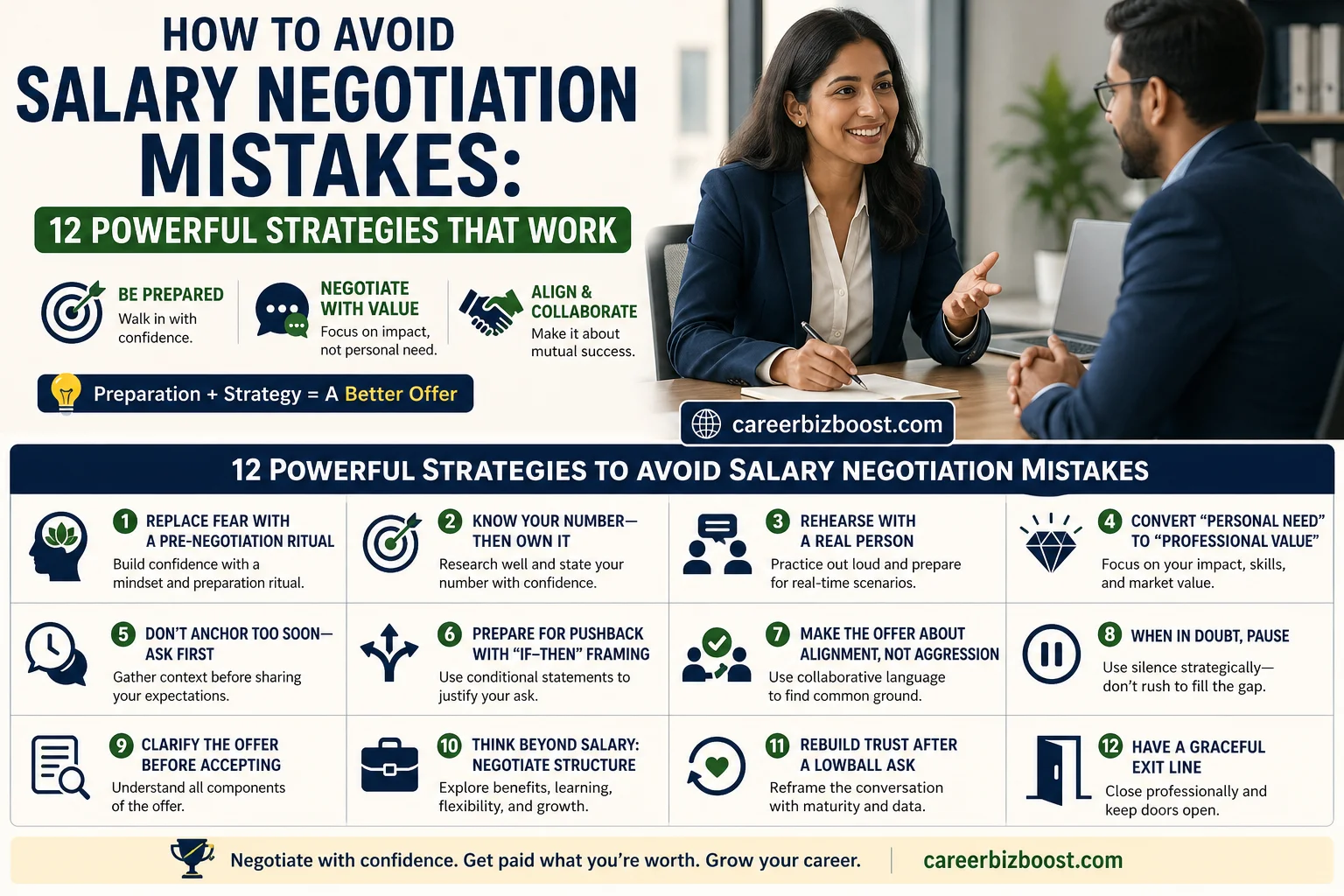
Rehearse With a Real Person
Practicing in your head is not enough. To truly master how to avoid salary negotiation mistakes, you need to rehearse aloud and simulate real-time scenarios to avoid freezing under pressure.
Fix
Rehearse out loud with someone who can challenge you. Ask them to:
- Push back on your ask.
- Offer a lower number.
- Throw in unexpected objections.
Pro Tip
Real-time simulation builds muscle memory. That’s how you turn a theoretical script into a real-life, confident response.
Convert “Personal Need” to “Professional Value”
A common mistake is justifying your ask based on personal needs—like rent, loans, or lifestyle expenses—which is why understanding how to avoid salary negotiation mistakes is crucial to framing your value professionally.
Fix
Flip the narrative. Focus on:
- Your impact.
- Your skills.
- Market value.
Sample Line
“In my previous role, I helped reduce churn by 18% in one quarter. Given that and the responsibilities here, I believe a ₹X figure reflects my contribution.”
Pro Tip
Keep the conversation about your professional value—not your personal situation.
Don’t Anchor Too Soon—Ask First
Mentioning your salary expectations too early is one of the salary negotiation mistakes to avoid. You risk lowballing yourself or losing negotiation leverage.
Fix
If asked early, respond with a strategic deflection.
Sample Line
“I’d love to learn more about the role and team before we discuss compensation. Could we come back to that once we’ve covered the scope?”
Pro Tip
Asking first helps you gather context, making it easier to position your expectations effectively.
Learn how to spot early warning signs with these salary negotiation red flags from recruiters.
## Before vs After: How to Avoid Salary Negotiation Mistakes in Action

**Before (Common Mistake):**
Candidate accepts the first offer without asking questions or negotiating.

**After (Smart Approach):**
Candidate asks for clarification, presents a researched salary range, and explores flexibility in benefits.

**Result:**
A stronger offer, better alignment, and increased confidence.

This example shows how learning how to avoid salary negotiation mistakes can completely change your outcome.
Prepare for Pushback With “If–Then” Framing
Pushback is inevitable. The mistake is not preparing for it.
Fix
Use conditional statements to reframe your ask based on deliverables.
Sample Line
“If the role includes managing vendor relationships and team strategy, I’d expect something closer to ₹X. Would that make sense?”
Pro Tip
This shows you’re not making arbitrary demands—you’re aligning your ask with responsibilities.
## Real Salary Negotiation Conversation Example

Recruiter: What are your salary expectations?
You: Based on my research and experience, I’m targeting a range of ₹X to ₹Y.

Recruiter: That’s slightly above our range.
You: I understand. If the role includes additional responsibilities like X and Y, would there be flexibility?

Recruiter: We may be able to adjust slightly.
You: I’d be happy to explore a structure that aligns with both expectations.

Practicing conversations like this helps you avoid salary negotiation mistakes and respond confidently in real situations.
Make the Offer About Alignment, Not Aggression
Coming across as demanding is one of the most common salary negotiation mistakes to avoid.
Fix
Use collaborative language to show openness.
Sample Line
“I’m really excited about this opportunity, and I’d love to explore how we can align the package with my background and expected contributions.”
Pro Tip
Positioning the conversation as mutual alignment, not a confrontation, maintains professionalism and goodwill.
💡 Need help structuring your response? Use this salary negotiation email template to reply professionally.
When in Doubt, Pause
Many professionals rush to fill silences, often making errors that can be avoided if they understand how to avoid salary negotiation mistakes. Talking themselves out of a strong ask is a common pitfall.
Fix
Pause intentionally after stating your number.
Sample Line
“I was expecting something closer to ₹X based on my experience and the role’s scope.” (Pause.)
Pro Tip
Silence signals composure. Let the employer respond.
Clarify the Offer Before Accepting
A common mistake is saying yes before understanding all parts of the compensation package.
Fix
Politely ask for details about the structure.
Sample Line
“Could you walk me through how bonuses are calculated and when performance reviews are typically held?”
Alternative Line
“What’s the vesting schedule for equity? Is there a structured timeline for progression?”
Pro Tip
Asking shows strategic thinking—not suspicion.
Compare multiple offers side-by-side using this job offer comparison tool.
Think Beyond Salary: Negotiate Structure
Many professionals treat salary as the only negotiable component—and walk away if it’s fixed.
Fix
Consider other elements like:
- Signing bonuses
- WFH setup budget
- L&D fund
- Extra PTO
- Accelerated promotion cycles
Sample Line
“If the base is fixed, could we explore flexibility in benefits—like a learning allowance or additional leave?”
Pro Tip
Creative negotiation showcases flexibility and thought leadership.
Understand why this matters with this guide on why salary negotiation is important.
Rebuild Trust After a Lowball Ask
Asking for too much without justification can hurt your credibility.
Fix
Reframe the conversation without losing face.
Sample Line
“Thanks for your feedback. I’d love to refocus on aligning the offer with the value I bring and what’s fair in the market. Based on X and Y, here’s what I was thinking…”
Pro Tip
This shows maturity and self-awareness—a trait recruiters respect.
Have a Graceful Exit Line
Ending awkwardly can leave a poor impression, especially if things don’t go your way.
Fix
Close with appreciation and openness.
Sample Line
“I really appreciate the time and transparency. While this may not be the right fit right now, I’ve enjoyed the process and hope we can reconnect in the future.”
Pro Tip
A professional exit keeps the door open for future opportunities.
Final Mindset Shifts on How to Avoid Salary Negotiation Mistakes
To truly understand how to avoid salary negotiation mistakes, start by shifting how you think:
| Old Thinking | New Thinking |
| “I’m not sure I should ask.” | “It’s expected and strategic to negotiate.” |
| “I’ll take what I get.” | “I have value, and I’ll advocate for it.” |
| “They’ll get offended.” | “Professionals expect respectful negotiation.” |
| “It’s just salary.” | “The full package defines my work-life quality.” |
| “I messed it up.” | “Every negotiation is a skill to improve over time.” |
Quick Checklist to Avoid Salary Negotiation Mistakes
Before your next negotiation, make sure you:
– Research your market salary range
– Define your walkaway and target numbers
– Practice your responses out loud
– Avoid discussing salary too early
– Focus on your value, not personal needs
– Prepare for pushback scenarios
– Consider total compensation, not just salary
Use this checklist to confidently avoid salary negotiation mistakes and improve your outcomes.
Common Myths About Salary Negotiation
**Myth:** Negotiating will cost you the job
**Reality:** Employers expect professional negotiation
**Myth:** Only experienced professionals can negotiate
**Reality:** Even freshers can negotiate effectively
**Myth:** You should accept the first offer if it’s “good enough”
**Reality:** First offers are often negotiable
Understanding these myths is key to learning how to avoid salary negotiation mistakes.
FAQs
What are the most common salary negotiation mistakes to avoid?
The most common salary negotiation mistakes to avoid include not researching market salary, accepting the first offer without discussion, revealing your expected salary too early, over-explaining your justification, and failing to prepare for pushback. Avoiding these mistakes helps you negotiate with confidence and secure a better compensation package.
How do I avoid salary negotiation mistakes as a beginner?
To avoid salary negotiation mistakes as a beginner, start by researching salary benchmarks, preparing a clear salary range, and practicing your responses in advance. Focus on communicating your value instead of personal needs, and use structured responses to stay confident during the conversation.
Is it a mistake to accept the first salary offer?
Yes, accepting the first offer without negotiation is one of the biggest salary negotiation mistakes to avoid. Employers often expect candidates to negotiate, and skipping this step can result in lower long-term earnings and missed opportunities for better benefits.
What should I say instead of giving a random salary expectation?
Instead of giving a random number, use a researched range:
“Based on my research and experience, I’m targeting a range of ₹X to ₹Y.”
This approach shows preparation and helps you avoid salary negotiation mistakes related to underpricing or overpricing yourself.
How can I recover from a salary negotiation mistake?
If you make a mistake, stay calm and reframe your position professionally. You can say:
“Let me clarify my expectations based on the role and market standards.”
Recovering gracefully shows professionalism and helps rebuild credibility during negotiation.
Why is preparation important to avoid salary negotiation mistakes?
Preparation is critical because it builds confidence, reduces anxiety, and helps you respond effectively to objections. Without preparation, candidates often make avoidable salary negotiation mistakes like underselling themselves or accepting unfavorable terms.
Can I negotiate benefits if the salary is fixed?
Yes, and not doing so is a common salary negotiation mistake to avoid. You can negotiate benefits like bonuses, remote work flexibility, learning budgets, extra leave, or joining bonuses to improve your overall compensation package.
When should I bring up salary in the interview process?
To avoid salary negotiation mistakes, it’s best to discuss compensation after understanding the role and expectations. If asked early, you can politely defer by saying:
“I’d like to learn more about the role before discussing compensation.”
How do I handle pushback during salary negotiation?
Handle pushback by staying calm and using conditional framing:
“If the role includes X responsibilities, I’d expect something closer to ₹Y.”
This approach helps you avoid emotional responses and keeps the conversation professional.
What mindset helps avoid salary negotiation mistakes?
A confident and strategic mindset is key. Instead of thinking “I’ll take what I get,” shift to:
“I understand my value and I’m prepared to discuss it.”
This mindset helps you avoid hesitation and negotiate more effectively.
A Real-World Insight on Salary Negotiation
In my 12+ years of project management and 4+ years in freelancing, I’ve seen professionals miss better opportunities—not because they lacked skills, but because they didn’t communicate their value effectively.
Learning how to avoid salary negotiation mistakes isn’t just about tactics—it’s about positioning your worth clearly and confidently.
CTA Section
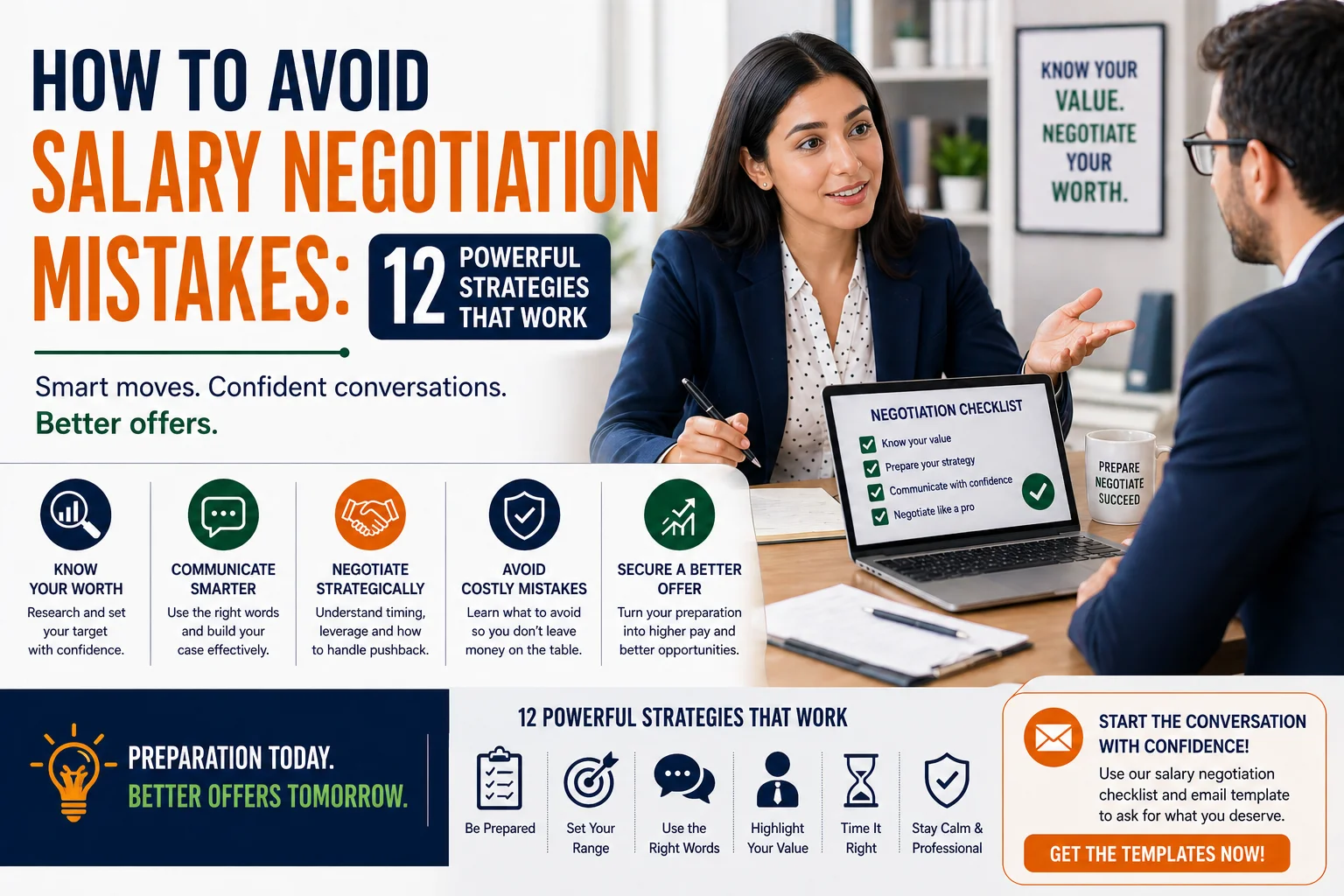
Start the conversation using this proven salary negotiation checklist.
